My experience with pet loss
What helped, what didn’t, and what I wish I knew
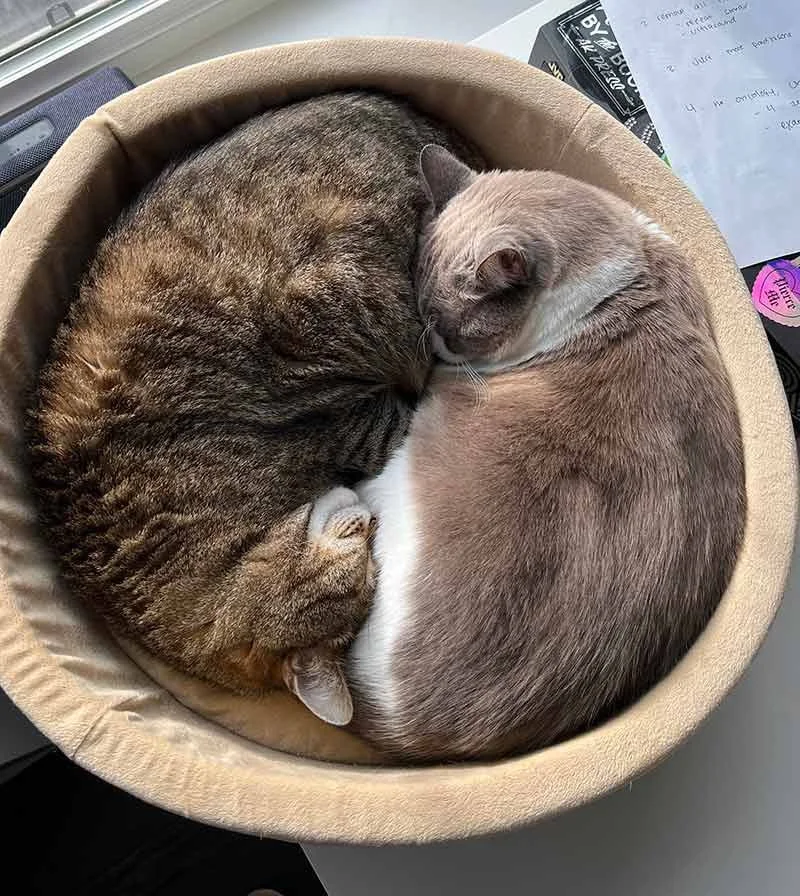
Royal and Jimmy, the way they always were with each other from day one.
Last year, both of my cats died four months apart from each other.
They were a bonded pair, and they were my whole world for 15 years. It completely changed me as a person, and I learned a lot about myself and about the process of pet loss.
For example, it’s a form of disenfranchised grief (Doka, 1999), meaning that society doesn’t acknowledge it or support it in the same ways it does for human death. It’s also distinct in the role of euthanasia, where pet caretakers often determine the timing and manner of their pet’s death (Cleary et al., 2022). That is to say, pet loss is devastating and complicated in its own right, and it is absolutely valid to tend to that grief and honor that bond in whatever way feels right to you.
If you are experiencing pet loss in any way, or anticipating the loss of a pet, I see you. And in case it’s helpful, here are some things I learned along the way.
The euthanasia experience
My two cats’ deaths went very differently. I’ll share what happened with each, with the hope that something here will help others.
The emergency vet death
The first was unexpected, after an emergency vet visit that ended up being our last morning together. It was harsh and confusing, and I wasn’t prepared whatsoever. I had no rituals planned, no comfort items to offer him as it happened—it was awful, and I left with regrets so heavy I could barely breathe.
If I could go back in time, these are some things I would have asked the vet for:
Ask to dim the lights: It might not be possible, but it can make a huge difference for everybody’s nervous systems.
Ask for as much quiet as possible:. If there are beeping machines or other medical noises, you can ask to stop those before the moment. Our vet also lit a candle in the reception area to let other guests know that somebody was saying goodbye so quiet was needed—this was a nice touch.
Take as much time as you need with your pet: Both before and after the euthanasia. In hindsight, I rushed through it because I was so scared, and I’ll always regret not taking more time with his body afterward. So if that is something you want to do—and it is 100% ok if not!—take the time and the room without apology. Usually vets are very understanding and kind about this.
You can ask the vet to cut locks of fur or whiskers at no cost: This is something I didn’t think of in the chaos, and I regret it heavily. They may also offer memorial items for purchase, like urns, paw print stamps, or ceramic paw prints. It was really hard for me to make those decisions in the aftermath, so if you have the chance, it can be helpful to consider what would be meaningful to you beforehand.
The at-home death
The second death came with a little more warning, and that meant I was able to schedule an at-home veterinary hospice visit. I gathered meaningful items for the moment, like a favorite blanket for shrouding him, some flowers, and his favorite toys. I also made sure I had a photo of the first cat that died nearby, so we could feel his presence as well. This death left me with more closure, but it was hard in its own way too—I struggled with a scheduled time for the death, and my room felt grief-haunted for a long time afterward.
Here are some things to consider if this option works for you.
I regretted not calling an at-home veterinary hospice sooner. They can visit before death is near to perform quality-of-life assessments and provide recommendations and guidance on how to know when the time is near. I think this could have eased the process even more, had I known.
We used At Home Veterinary Care and felt very held and comforted by Dr. Packer’s care. Lap of Love and Paws in Heaven are also great options available in the Salt Lake Valley.
Take as much time as you need both before and after the euthanasia. The at-home vet was very gracious and offered us privacy with the body, with no rush. This allowed me to perform a meaningful shrouding ritual, and I felt like I sent his body to the crematory lovingly in a way I couldn’t for the other cat. Just note that if you’d like to do something similar, you won’t get the blanket/towel back, so don’t choose anything super meaningful that you want to keep.
Disposition options
Regardless of where the death happens, you can choose home burial or cremation for your pet’s body.
If you choose burial in your yard, you can transport the body home yourself, or you can arrange for transportation services from a place like Paws in Heaven.
If you choose cremation, the vet can usually arrange this for you, and they’ll take care of transport. You can also take the body to the crematory yourself, where you can sometimes ask for a final viewing. They will also ask if you want a group cremation with no ashes returned (which is cheaper) or a private cremation with ashes returned.
Tending to pet loss grief
Grief lands differently for everyone, and whatever you feel is normal. Here are some things that helped me.
Helpful tools for acute grief
These are the things I reached for when the pain was at its worst and nothing else was possible:
Cocoon the physical body: Comforting objects helped me a lot in the beginning, like a favorite stuffed animal, soft clothes, soft blankets, candles, warm beverages, hot showers—whatever this looks like for you, take it.
Nausea relief: My grief registers most often as nausea, and keeping a fan nearby for air flow helped me stay grounded through the worst waves of it. I also sniffed rubbing alcohol on a tissue for “olfactory distraction,” which is probably just a placebo effect, but very effective for me nonetheless.
Creating a physical grief space: I immediately cleared a small space near my bed for an altar of sorts, with photos, toys, and other objects my cats loved. This gave my grief a physical place to dwell. It doesn’t have to be fancy or big—just a place to focus the grief so it doesn’t feel so bottomless. When I couldn’t stop crying, this was a sacred space for me to kneel in front of and shed those tears.
Dosing the grief: This concept comes from the dual-process model of grief, which normalizes turning away from the grief when it’s unbearable. For me, this looked like putting on mindless reality shows to distract my brain for a minute. It didn’t make the grief go away, but I learned to ride the waves of intensity until they were less intense.
Therapy for the traumatic stuff: I needed a lot of support processing my first cat’s death. The guilt was unbearable, and I had nightmares and brutal ruminations about how it all went down for a really long time. My therapist walked me through some EMDR-like meditations/visualizations with bilateral tapping that made all the difference in the world. Again, it didn’t make it disappear, but it helped me process the regret, offer it some grace, and make peace with the bond my cat and I shared.
Support from friends and family that helped
If you’re wondering how to support someone experiencing pet loss, here are some things that helped me:
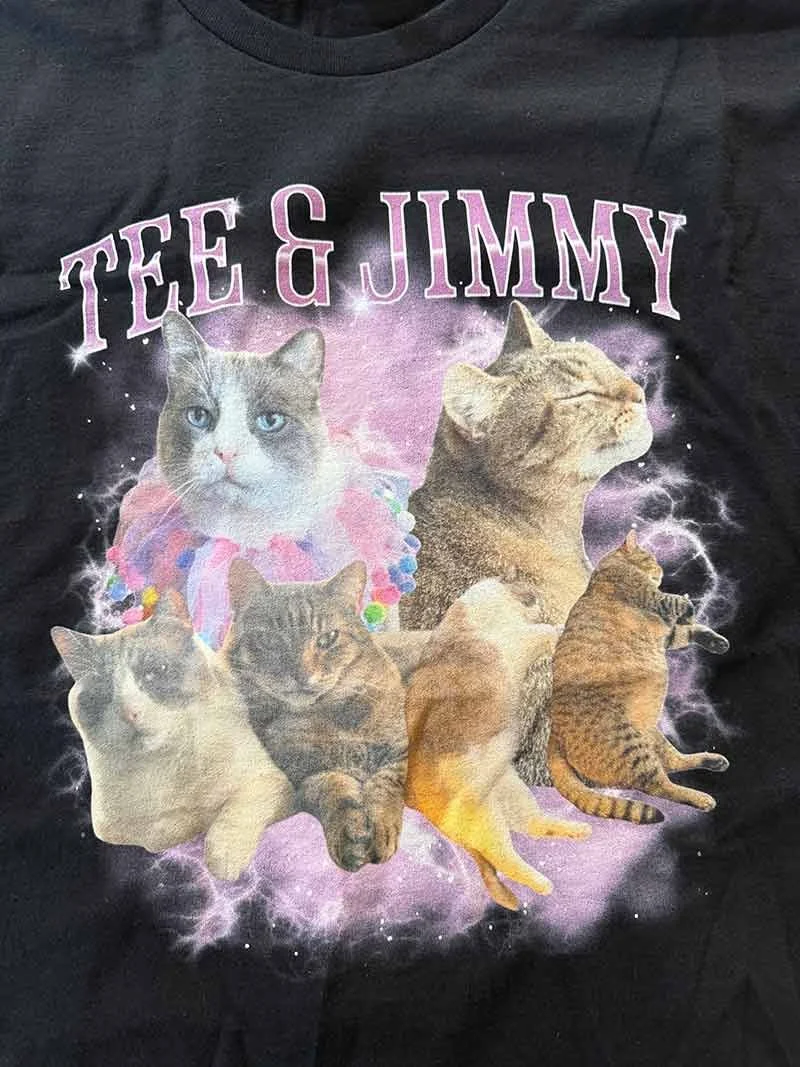
A favorite gift from my dear friend MJ. It’s my go-to comfort shirt.
Meal support: In any shape or format! Prepared meals dropped off on my doorstep, grocery delivery, and DoorDash gift cards were all so crucial. I’ll never forget how helpful this was, because eating was the hardest thing to think about when the grief was at its highest intensity.
Acknowledgment of the bond: Cards, photos, beautifully drawn portraits, and flowers from friends validated how much these cats meant to me, and knowing that my community understood that bond made me feel seen and held. I especially loved when people shared their own favorite memories of my cats—that was pure medicine. I can’t express how important simple acknowledgement of the bond really is.
Donating to a cat charity in their name: This one dropped me to my knees. I can’t explain it, but it felt like it made their deaths meaningful somehow. I was very, very moved by this particular extension of care from those I love.
Helpful tools for ongoing grief
Once the grief wasn’t so acute, I found it helpful to create memorial spaces that encouraged a continuing bond. This is a concept from the bereavement world that suggests maintaining a sense of connection to the deceased can be a helpful way to adapt, rather than a hindrance to coping (Klass et al., 2014). Through ritual, meaningful objects, and spiritual connection, the deceased can remain a transformed but constant presence in the inner lives of the bereaved (Neimeyer, 2001).
Here’s how that looked in my case:
Mini altars throughout the house: So many rooms in the house felt haunted, because all of their stuff was still lying around. I dealt with this by creating mini altars in each room, gathering their things into one intentional spot so it didn’t feel so strewn about, and I could still feel their presence in the rooms without feeling overwhelmed. I didn’t want to get rid of anything right away, as I wanted more time for our bond to shift in dimension. (Of course, if that’s what you need to do, DO IT! There is no right or wrong way to grieve.)
Wearable memorial items: I had a ring and necklace made with their whiskers and ashes, and I wear these little talismans anytime I make hospice visits or attend a grief group. I also keep them near the boys’ permanent altar where their double urn rests, to “charge” them with courage and heart to face death and grief in everyday life. There are many, many artists that offer this kind of thing, and if it’s accessible to you, I highly recommend it.
Memorial garden: We created a little barrel garden that we tend to throughout the year, which offers a dynamic, tangible space for working with my grief as it transforms. I enjoy adding seasonal trinkets to it to keep it fresh, and I leave letters there when I need to talk to them. My friend Chloe made little garden spinners for me, with their face and name on them, and I love the way this space interacts with the squirrels and birds that come to visit. It makes me feel like they’re part of the universe again, and in good company.
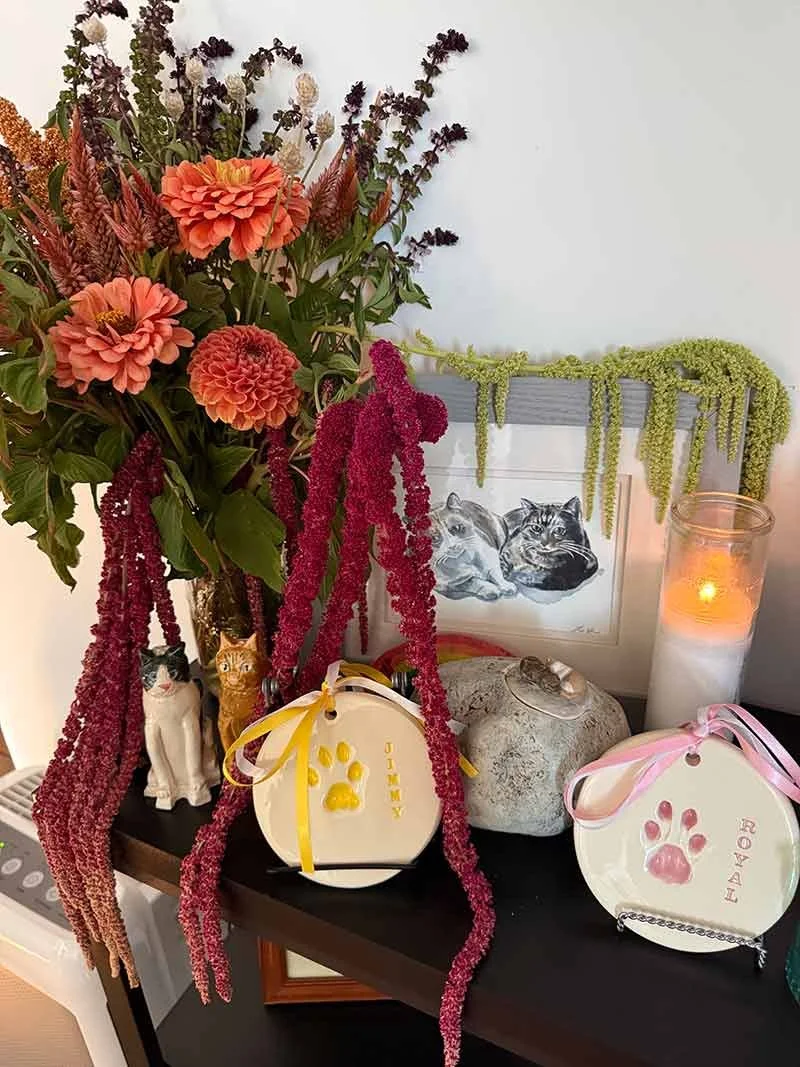
An example of a mini altar. This one was for their one-year death anniversary.
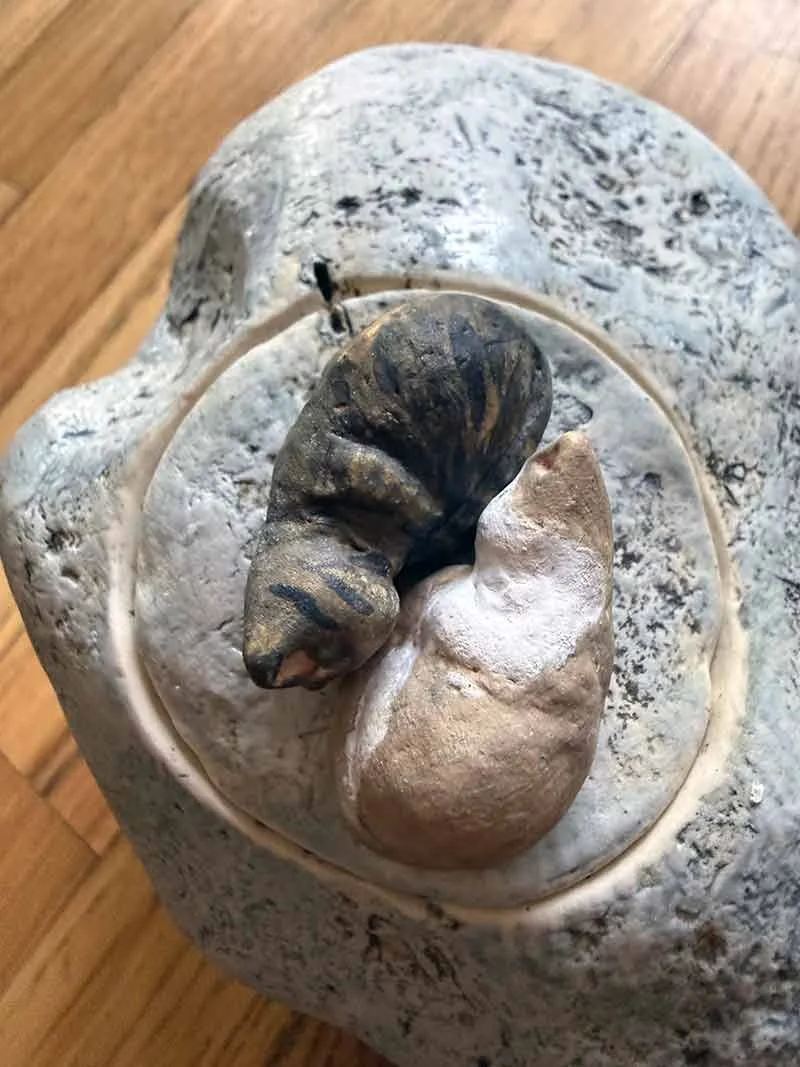
A double urn a friend made for me. It felt like the biggest relief to have them resting in the same place together.
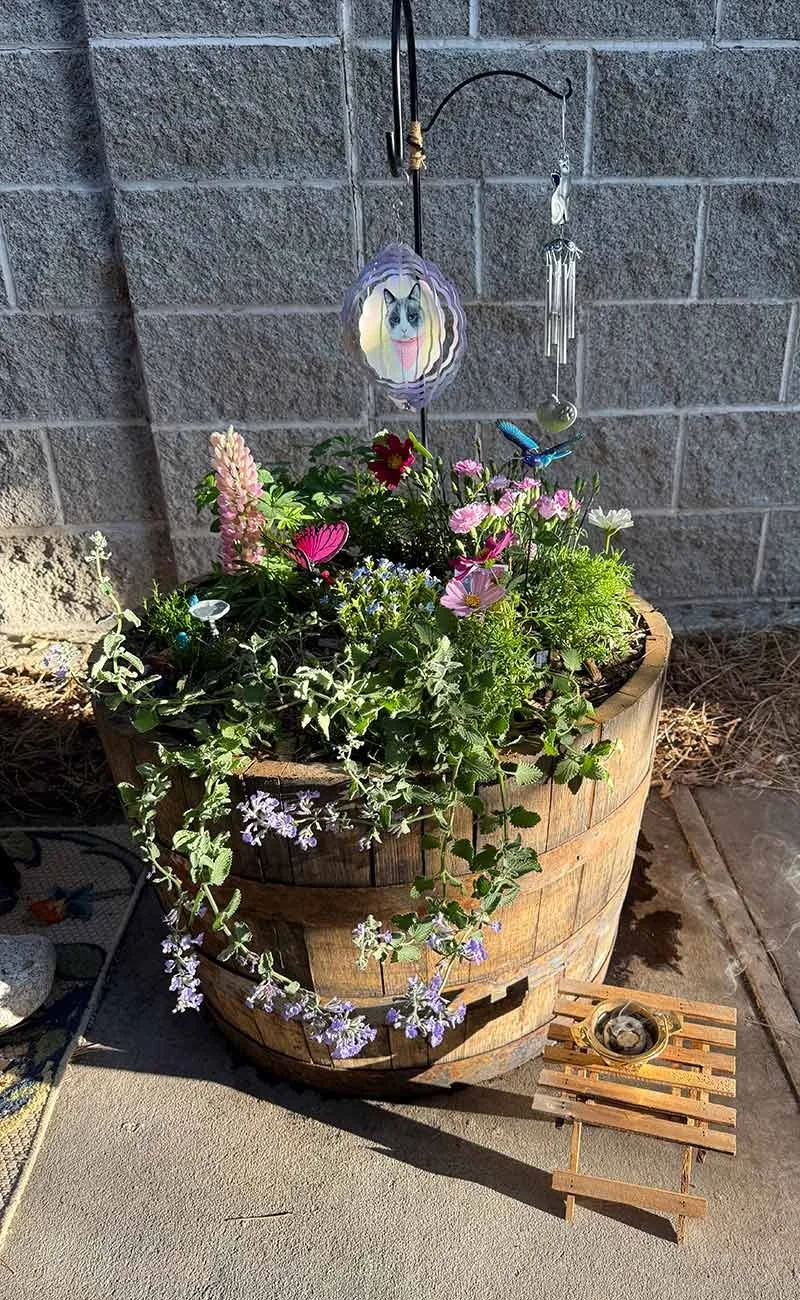
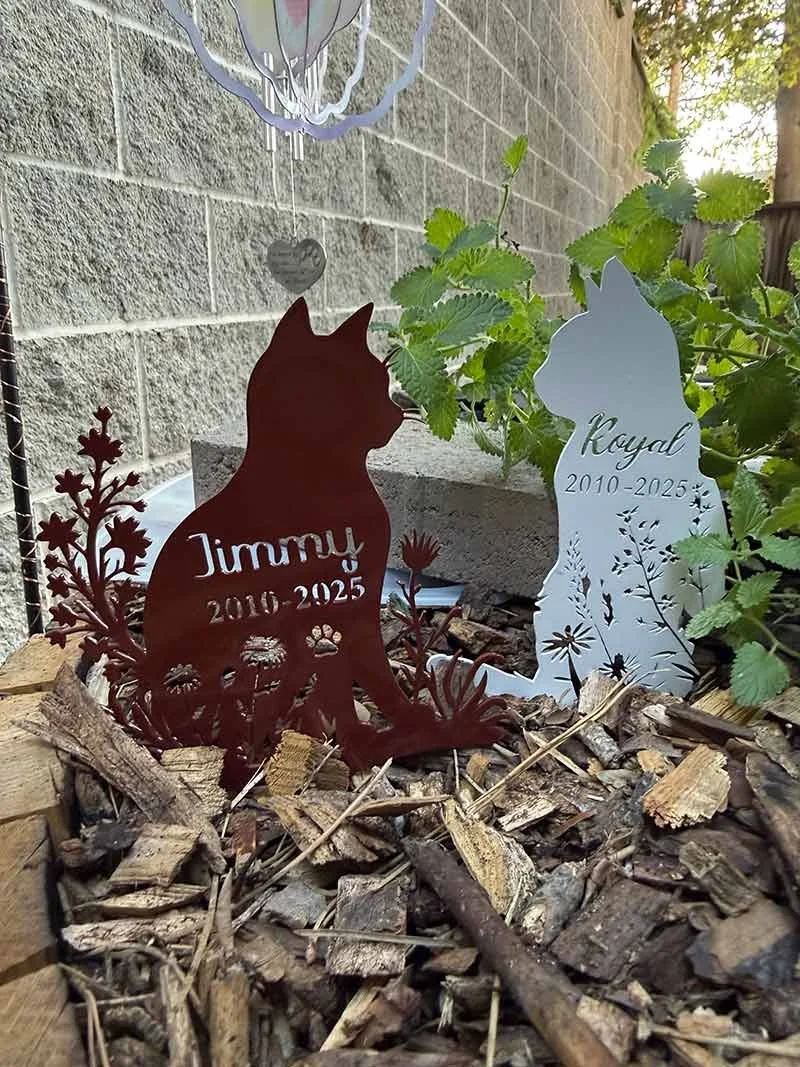
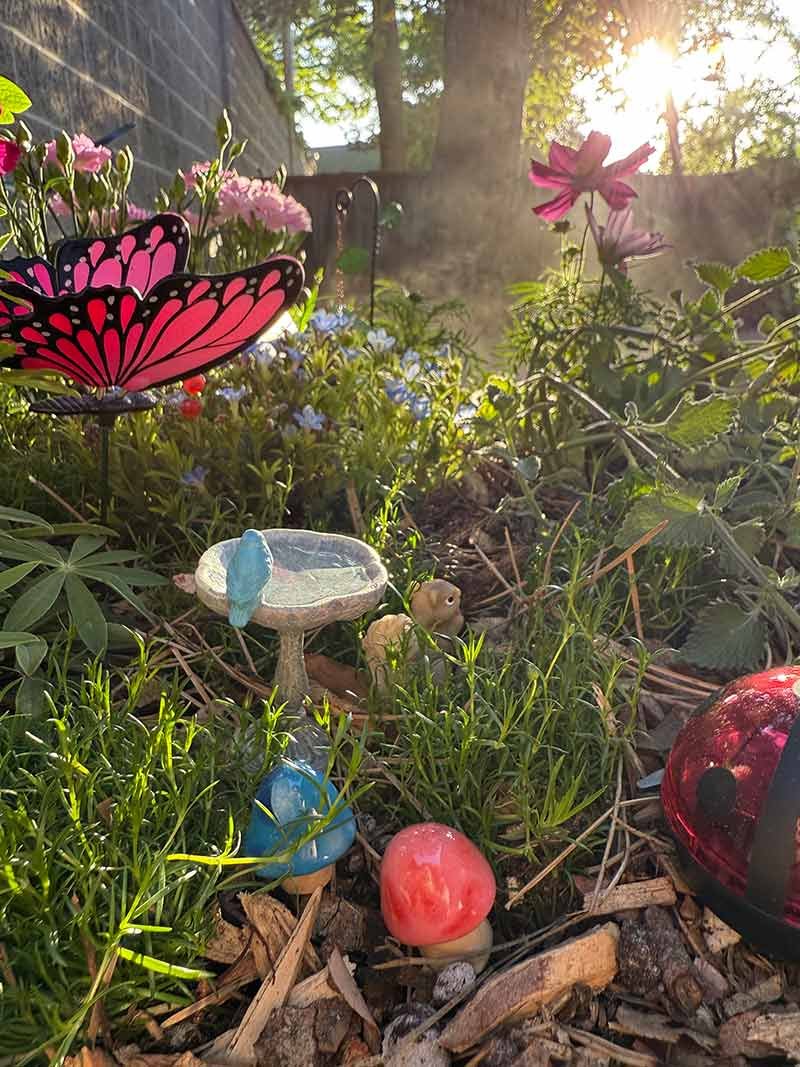
Sometimes the squirrels steal and bury these trinkets, but it makes me feel like they’re all in on the mischief together.
If I could leave you with one thing here, it is permission to grieve your pet in any and all ways that feel good to you. The bond we share with our pets offers so much—unconditional love and acceptance, companionship, stress relief—and they are there with us through major life events as dependable teammates (Cleary et al., 2022). Whatever your pet grief looks like, I honor it and offer you my whole heart.
May your pet grief land safely here.
References
Cleary, M., West, S., Thapa, D. K., Westman, M., Vesk, K., & Kornhaber, R. (2022). Grieving the loss of a pet: A qualitative systematic review. Death Studies, 46(9), 2167–2178. https://doi.org/10.1080/07481187.2021.1901799
Doka, K. J. (1999). Disenfranchised grief. Bereavement Care, 18(3), 37–39. https://doi.org/10.1080/02682629908657467
Klass, D., Silverman, P., & Nickman, S. (2014). Continuing bonds: New understandings of grief. Routledge Taylor & Francis Group.
Neimeyer, R. A. (Ed.). (2001). Meaning reconstruction & the experience of loss. American Psychological Association. https://doi.org/10.1037/10397-000